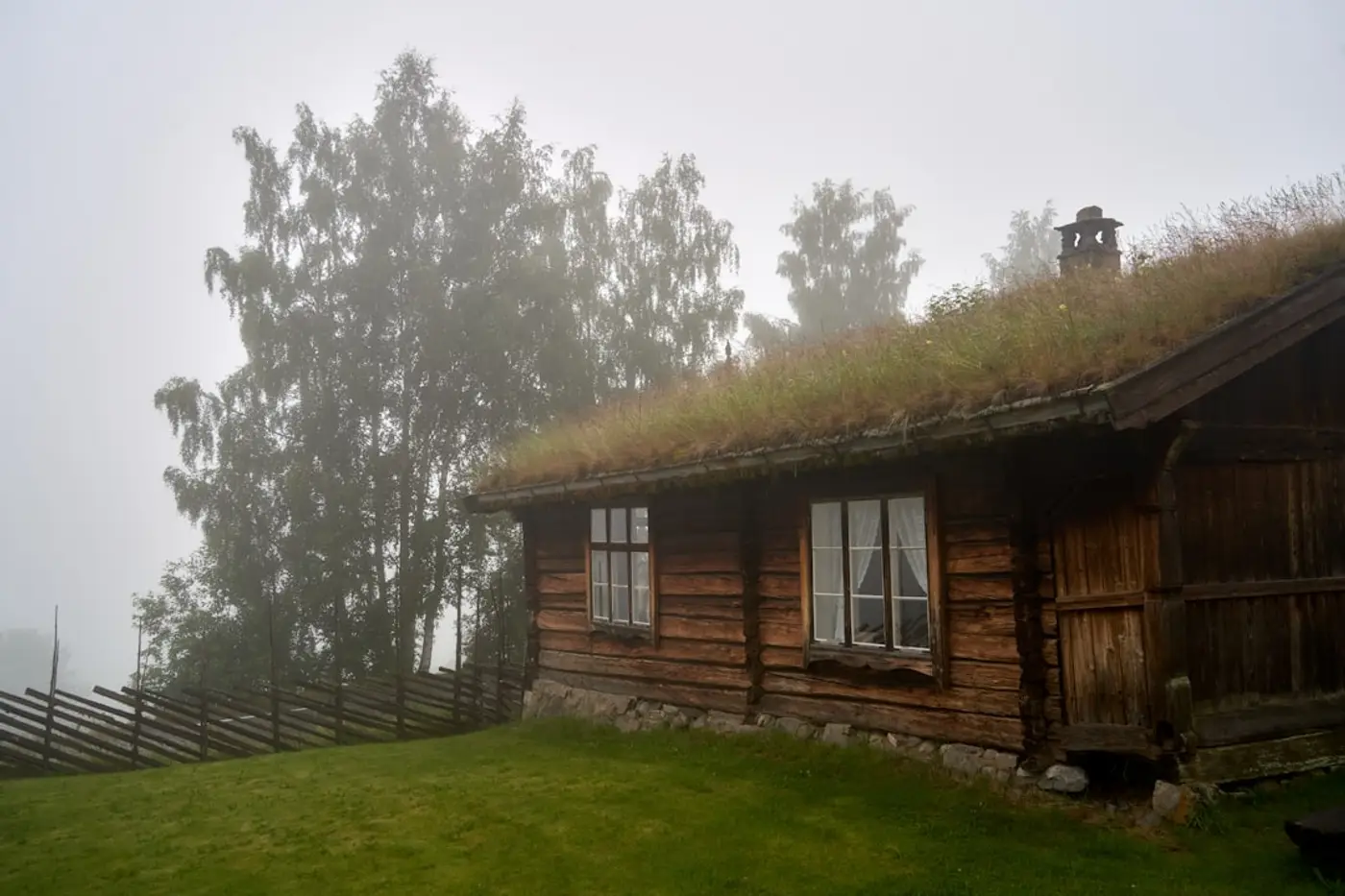
The story of Scandinavian Bildung begins in 1795, when Friedrich Schiller writes letters to Denmark. The recipient is the Duke of Schleswig-Holstein-Sonderburg-Augustenburg, who financially supports Schiller’s philosophical work. The letters burn in the Duke’s castle; Schiller rewrites them and publishes them under the title On the Aesthetic Education of Man. They are letters about a revolution that requires no blood. The question Schiller poses is simple: why does a correct operating system, as he puts it, not yet produce a correct society? Why does the French Revolution end in Jacobin terror even though the ideals are sound?
His answer: because the people are not ready. Not in a moral sense, not as an accusation, but as a diagnosis. The vain hope, Schiller writes — the moral possibility is lacking, and the generous moment finds an unreceptive generation (cf. Schiller, 1795, Fifth Letter). Among the lower classes, raw drives rage; among the higher, cold calculation rules. The state cannot simply be rebuilt, because its inhabitants are still the old ones. Revolution without Bildung produces convulsions.
#From Aesthetics to the Folk High School
What Schiller thought through in solitude became practice in Scandinavia. The Danish pedagogue N.F.S. Grundtvig read the aesthetic letters and recognized in them a programme. Not a programme for philosophers, but for farmers — for the rural population trapped in feudal structures. Grundtvig founded the folk high schools in the second half of the 19th century, where young people gathered for roughly half a year. There they learned not only practical skills — how to found cooperatives, democratic procedures, current scientific knowledge — but something that cannot be pressed into a curriculum: how to articulate oneself, how to withstand disagreement, how to pose counter-questions, how to let one’s own thought mature against the resistance of another’s.
The result was civilizational. At the peak of the movement, up to ten percent of the young rural population attended these schools. From Denmark, the model spread to Norway and Sweden. Backward feudal agrarian states transformed within a few decades into what they are today: societies with a high degree of social cohesion, democratic participation, and welfare. The principle was upheld until roughly 1950, when people decided they no longer needed it.
#Bildung Against Training
Schiller’s thought can be brought down to a distinction that Gwendolin Kirchhoff repeatedly takes up in her talks: Bildung or training. Bildung means the development of the self — the fostering of a person who can orient themselves in connection with others, who thinks independently, who has cultivated their capacity for feeling and out of that cultivation becomes capable of action. Training means the opposite: fixing people into functions in which Bildung is increasingly withdrawn from the bottom up. An upper class retains a certain Bildung; the rest are kept functional.
This contrast is not historically settled. When you think back to your own schooling, you will notice the question is still open: was something built within you, or were you trained for something? What was established as the Humboldtian ideal of Bildung in Germany is under pressure from an Anglo-Saxon counter-model that reduces Bildung to vocational training — to measurable competences and marketable qualifications. The Scandinavian experience shows that the difference between these two paths is not academic but societal: it determines whether a commonwealth functions or disintegrates.
#The Connection to Mengzi
That Schiller’s thought on education does not stand alone in the European space belongs to the insights that run through Gwendolin Kirchhoff’s work. In the Chinese philosopher Mengzi, whom she calls the great other philosopher of Bildung (cf. Kirchhoff, G., Philosophie & Zukunft, 48:47), a related basic figure appears. Mengzi taught that seeds of the good are laid within the human being — compassion, a sense of shame, a feeling for right and wrong. These seeds do not need to be manufactured. They need to be nourished (cf. Mengzi, 6A).
What Schiller calls aesthetic education and Mengzi the cultivation of the seeds aims at the same point: a person becomes good not through instruction but through a development that connects to something already laid within them. If you take this seriously, it changes the way you look at every form of pedagogy. The constructive development begins in the moment I enter into it, Gwendolin Kirchhoff says (cf. Kirchhoff, G., Philosophie & Zukunft, 48:47). No goal in the future is being steered toward; rather, in the moment when someone acts out of dignity and in recognition of what has been given them, the goal is already reached. We are not working toward something that lies in the future. The point is that we become what we are.
#Herzensbildung as a Cultural Project
In conversation with the AI researcher Joscha Bach, Gwendolin Kirchhoff brings the Scandinavian Bildung idea to its current point: the future can only work, including in the peaceful sense, if connection and contact between human beings is possible. And it only works through a developed heart (cf. Kirchhoff, G., Everlast AI, 2026, 10:45). The positive developments that came from the Scandinavian experiment make her believe strongly in the subject of Bildung — Bildung as Herzensbildung and as a cultural project (cf. Kirchhoff, G., Everlast AI, 2026, 2:32:56).
Herzensbildung here is not a sentimental term. What is meant is the capacity to cultivate one’s own world of feeling such that judgement, the ability to make contact, and the capacity for action arise from it. Schiller called this the aesthetic state — a third state between pure sensibility and pure understanding in which the human being is whole (cf. Schiller, 1795, Twentieth Letter). The Scandinavian folk high schools had not made this state the topic of a seminar. They had made it the foundation of a pedagogy that transformed entire societies.
Whoever engages with the question of what Bildung might look like today that does not amount to training will find an anchor in this story. The thought that the number of free and moral individuals in the state must increase for the state itself to transform is Schiller’s legacy and at the same time the working principle of the Scandinavian movement. It is a slow path. But it is the only one that has worked.
In the lexicon, this topic connects with wisdom, which as an orienting faculty precedes all Bildung; with maieutics, which as a form of dialogue calls forth what is one’s own in the other rather than transmitting knowledge; and with encounter, without which every pedagogy remains empty.
#Sources
- Schiller, F. (1795). Über die ästhetische Erziehung des Menschen, in einer Reihe von Briefen. In: Die Horen, Bd. 1-2. Tübingen: Cotta.
- Mengzi (ca. 300 BCE). Mengzi.