Philosophical Dialogues with Jochen Kirchhoff
Between 2018 and 2024, I conducted 22 philosophical dialogues with my father, the philosopher Jochen Kirchhoff. These conversations revolve around the questions that have shaped my thinking: What is nature? What is knowledge? What stands against the human being — and what sustains us?
Natural Philosophy & Cosmology
Der Weltenwille als Baustoff und Lebenstrieb des Kosmos
Since Galileo, natural science has confined itself to quantifiable forces. Chance replaces teleology; life hovers as a groundless oasis amid dead forces. German metaphysics of will — from Schopenhauer to natural philosophy — offers a fundamental counterpoint.
Schelling: Genie der Naturphilosophie
Exactly 180 years after Schelling's inaugural lecture in Berlin, we invite him to drive out a very different dragon seed: that of transhumanism. Schelling's natural philosophy shows what distinguishes it from abstract natural science — and what we can learn from it.
Das Unendliche und das Endliche
At no time like today are we so confronted with the question of limits. From this grip of constriction arises the question of the boundless — from finite and infinite space in cosmology to the living experience of infinity.
Goethe als Philosoph
Can Goethe's living approach to nature offer an escape from digitalization and the smart city? His thinking reveals that narrowing our view to the inorganic must inevitably destroy the living — and provides a substantive alternative.
Was die Erde will
The Earth holds humanity in its highest dignity — yet we can also trample that dignity. What does the Earth want from us, and how do the pandemic crisis and ecological destruction relate to the question of the planet's will?
Schönheit und Kosmos
Can beauty be trusted, or does it deceive? Beauty as that which sounds harmoniously, passing through chaotic zones yet reaching resolution — an exploration of the nature of beauty and its cosmic ground.
If these conversations resonate with you and you carry similar questions in your own life — I'd welcome a conversation with you.
Thinkers of Tradition
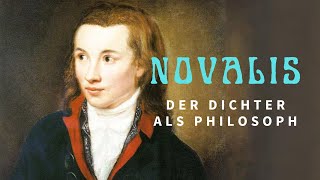
Novalis: der Dichter als Philosoph
Friedrich von Hardenberg — Novalis — died at 28 and left an outstanding contribution to romantic natural philosophy: analogy as the bond of higher unity, the Messiah of nature, and the poetic state in which the king makes all people capable of the throne.
Nietzsche als Wissenschaftskritiker
The philosopher of God's death, the thinker of the Übermensch — in what sense can we speak of science critique in Nietzsche? And why constantly critique science while using cameras and the internet ourselves? We trace precisely this tension.
Heraklit vs. Sokrates — Die Spaltung der Philosophie
What is philosophy? Common opinion sees it as unhealthy intellectualism. Yet since early Romanticism an inner split has emerged: Heraclitus's thinking in cosmic-spiritual forces stands diametrically opposed to Socratic thinking in rational concepts. Nietzsche loved the one and hated the other.
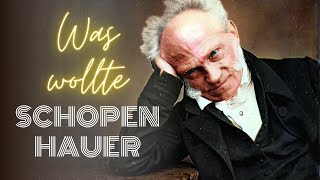
Was wollte Schopenhauer?
Schopenhauer presents a comprehensive metaphysics of will and science critique, bridging the gap Kant tore between subject and thing-in-itself. A brilliant stylist whom Horkheimer considered greater than Marx — yet almost nobody reads.
Was wollte Nietzsche?
Few thinkers exert such unbroken fascination as Nietzsche — the language virtuoso, the hermit of Sils-Maria, who collapsed in Turin in 1889. Whoever opens to the fire of his thought does not emerge unscathed. We approach him through seven key themes.
Science Critique & Contemporary Diagnosis
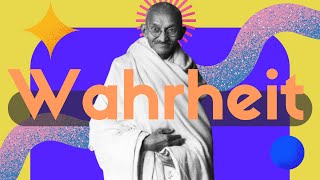
Der Kampf um die Wahrheit
Post-factual age, truthers, prophetic revelation — truth today appears as the great unmasking, a twilight of idols in Nietzsche's sense. Is there an absolute truth? Can it be known? And what exactly is its adversary?
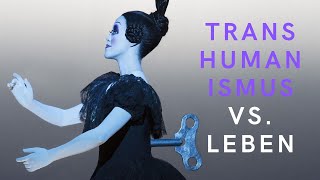
KI und Transhumanismus als Bedrohung des Lebendigen
2023 as the great coming-out of AI. Transhumanism promises evolution through merging with technology — yet one could equally speak of pathogenesis: the progressive development of symptoms of a possession hostile to one's own body.
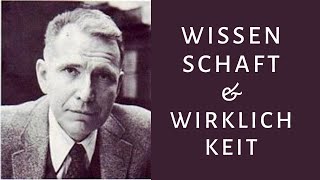
Wissenschaft auf dem Prüfstand
Science and truth have become near-synonyms in the zeitgeist. But is the scientific worldview even correct? Where exactly does it go wrong? We turn to DNA base pair discoverer Erwin Chargaff, who saw a biological atom bomb emerging from the developments.
The Great Reset als Technische Welterlösung?
Since the onset of the pandemic, talk of a “new normal” abounds. The World Economic Forum's Great Reset program reveals the undercurrent of the modern zeitgeist: technological salvation, transhumanism, loss of reality. Is there another reset possible?
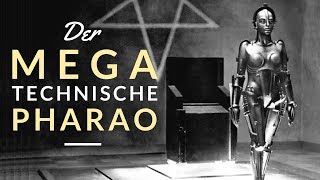
Der megatechnische Pharao
The megatechnical pharaoh — perhaps the most powerful force on this planet, mightier than all religions combined. The totality of what dominates the Earth technically, scientifically, and economically: an adversary principle that Jochen Kirchhoff traces through his tetralogy.
Consciousness, Myth & the Divine
Aliens — Außerirdische als Herausforderung
In modern science fiction, the gods have given way to extraterrestrials. The esoteric scene knows starseeds and reptilians. Yet in cosmology, truly intelligent others barely appear. What does it do to us to face the reality of extraterrestrial beings?
Das Mythische — Unterwelt oder Anderswelt?
Thomas Mann says the mythical represents an early, primitive form in the life of humanity — but a late, mature one in the life of the individual. In the mythical, two opposing movements are thus at work. Why does it not let us go?
Sind die Götter unter uns?
The gods are present wherever something decisive occurs — writes Walter F. Otto. The reader of the Iliad knows that nothing happens without divine intervention. What are the gods, why were they so defining in human life — and are they still?
Außenwelt Innenwelt — Das Doppelwesen Mensch
Elon Musk implants the first chip in a human brain. Lived interiority is treated as a phantom of external hardware. Where inner world existed, available outer world shall be. But to set an absolute boundary, the primal polarity of inner and outer must be clarified.
Nietzsche und die Große Gesundheit
“I make philosophy from the will to life, to health” — says Nietzsche. A symposium excerpt on the connection between philosophy and health, between thought and bodily experience.
Was ist Erkenntnis? Wissenschaftliche Methode & Philosophie
How does one arrive at knowledge and distinguish certainty from mere belief? Newton still called his main work the mathematical principles of natural philosophy. Yet since the beginning of philosophy, other paths to knowledge have always existed.
These dialogues form the foundation of my philosophical practice. If the questions that resonate here also move you —
Book an initial conversationSee also: Victoria Knobloch Films