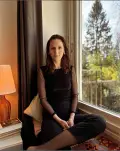
Kundalini Yoga and Natural Philosophy: The Body as a Cosmic Organ
Kundalini energy becomes philosophically intelligible when the body is understood not as a machine but as a cosmic organ of perception — a Raumorgan that receives the living cosmos.
Kundalini energy is a term that divides two worlds: one turns it into a fitness programme with breathing exercises and chakra charts, the other into an esoteric mystery accessible only to initiates. Both framings miss what actually happens when the ascending force becomes palpable in the body. What is missing is a philosophical standpoint that takes the phenomenon seriously without trivialising or mystifying it. That standpoint is provided by Naturphilosophie — a tradition of thought that understands the body as a cosmic organ of perception and thereby bridges embodied practice and philosophical depth.
#What Kundalini Yoga is not — and why that matters
Western reception has squeezed Kundalini Yoga into two drawers, neither of which fits. The first drawer: yoga as physical training. In this reading, asanas are stretching exercises, pranayama is a breathing technique, and Kundalini energy dissolves into a vague sense of wellbeing after class. The body remains what it has always been under the materialist worldview — a functional apparatus that needs good maintenance. The second drawer: yoga as spiritual technique. Here Kundalini becomes a kind of cosmic current that the right exercises can activate and guide upward through seven chakras — an energy management that structurally mirrors the very efficiency thinking it claims to transcend.
Both framings lack philosophical ground. The fitness approach has no concept of why bodywork can alter states of consciousness at all. The esoteric approach operates with terms like vibration and frequency that hang in empty space — without philosophical tradition, without conceptual rigour, without accountability to thought. The question that neither asks is: What must the body be for what happens in Kundalini practice to be possible in the first place?
#The body in Naturphilosophie — not an apparatus, but an organ
The answer begins with Friedrich Wilhelm Joseph Schelling. In 1797, the then twenty-two-year-old philosopher formulated a sentence that captures the relationship between nature and spirit:
This sentence is not a poetic flourish. It is an ontological claim: nature and spirit are not two separate substances that must somehow be brought together — they are the same thing, viewed from two sides. If this holds, then the human body is not a mere container for an independent consciousness. It is spirit in visible form. And conversely, the consciousness we experience is nature in its invisible shape.
Jochen Kirchhoff brought Schelling’s thought into the present and radicalised it. In his Naturphilosophie, space is not an empty container in which indifferent physical processes unfold. Space is alive, ensouled, perceptible. “Cosmic space is world-soul” — the formula of Helmut Friedrich Krause, adopted by both Kirchhoffs (cf. Kirchhoff, J., 2007, Räume, Dimensionen, Weltmodelle). And the human body possesses an inner organ for perceiving this living space — the Raumorgan, a faculty that does not grasp but receives.
What changes when the body is understood this way? Embodiment shifts from obstacle to precondition. The body does not hinder knowing — it is the medium through which knowing occurs in the first place. Schelling put it thus: as long as I am myself identical with nature, I understand what living nature is as well as I understand my own life. The moment I separate myself — and with me everything ideal — from nature, nothing remains but a dead object (cf. Schelling, 1797, Introduction). The body is the site where this identity becomes experienceable.
#Yoga as access to the Weltinnenraum
Within this philosophical framework, what Kundalini Yoga actually accomplishes becomes intelligible — and why it is more than gymnastics or energy work. The Indian tradition speaks of a Weltinnenraum, an Akash, a plenitude that does not lie beyond the senses but becomes accessible through refined perception. Gwendolin Kirchhoff, herself a certified Kundalini Yoga teacher and philosopher, describes this connection with philosophical precision: “Yoga, through the body and through the subtle organs of the body and its inner structure, is a kind of receiving instrument for information” from this Weltinnenraum (Kirchhoff, G., 2025, “Jenseits des Materiellen — Yoga als Zugang zum Weltinnenraum,” 05:48).
The phrase “receiving instrument” is deliberately chosen. It describes neither production nor construction, but reception. The body does not produce the Kundalini experience the way the brain supposedly produces thoughts. It receives — and the practice of Kundalini Yoga prepares the body for this receiving. Breathing exercises, bandhas, mudras, and meditations train the body’s capacity to perceive subtler information that, in ordinary waking consciousness, is drowned out by the dominance of sense stimuli.
The subtle anatomy of yoga — nadis, chakras, granthis — is, in this perspective, not an esoteric phantom but a topography of reception, distilled from millennia of systematic self-observation. Gwendolin Kirchhoff emphasises that she knows from her own experience “that this subtle anatomy posited by yoga actually corresponds to a reality” (Kirchhoff, G., 2025, “Jenseits des Materiellen,” 05:48). This is not a statement of belief but an experiential report — supported by a philosophical tradition that grants the body the competence to perceive reality beyond the sensory.
#Naturphilosophie resolves the split
The separation of body and mind that has pervaded Western thought since Descartes renders Kundalini experiences philosophically homeless. In a dualist framework, the body can either function mechanically or be mystically illuminated — tertium non datur. Naturphilosophie offers this third: the body as the site where nature and spirit, inner and outer, self-experience and world-experience converge.
Jochen Kirchhoff described the human being as a dual being with an inner world and an outer world, a polarity to be understood not psychologically but ontologically: the inner world is a reality of consciousness with its own laws — a different physics. Whoever denies this duality does not comprehend the human being (cf. Kirchhoff, J., 2007, Räume, Dimensionen, Weltmodelle). Kundalini Yoga works precisely at this threshold. The practice refines perception of the inner world — not as flight from the outer world, but as an expansion of the field of experience.
What the Indian tradition describes as ascending Kundalini energy can be understood in natural-philosophical terms as the opening of the Raumorgan. The energy does not ascend in an abstract energy-body — it moves through the body, and in doing so the body becomes more receptive to dimensions of reality inaccessible in everyday consciousness. The so-called chakras mark thresholds of receptivity; the Kundalini experience marks the moment when the body reveals itself as a cosmic organ.
#What changes when yoga meets philosophy
The question that concerns many practitioners is: why is practice alone not enough? Why does it need a philosophical framework? The answer lies in what Gwendolin Kirchhoff describes as an ethical ideal that emerges from the Weltinnenraum. “If I have access to a Weltinnenraum, then an ethical ideal comes towards me from this Weltinnenraum. My actions are not arbitrary” (Kirchhoff, G., 2025, “Jenseits des Materiellen,” 09:30).
Without a philosophical framework, the Kundalini experience remains an intense episode in search of interpretation — and the available frameworks are either too narrow (neurological) or too wide (esoteric). Naturphilosophie offers a third way: the experience becomes intelligible as the body’s self-perception within a living cosmos. Whoever practises yoga with this understanding is not executing techniques but cultivating the conditions under which the body can unfold its receptive capacity.
| Yoga without philosophy | Yoga with Naturphilosophie | |
|---|---|---|
| Understanding of the body | Functional apparatus | Cosmic organ of perception |
| Kundalini experience | Intense episode | Opening of the Raumorgan |
| Aim of practice | Wellbeing or spiritual ascent | Receptivity of the body |
| Ethical dimension | External (rules) | Arising from experience itself |
Jochen Kirchhoff developed in his book Klang und Verwandlung the idea of a “Klang-Yoga-Lehre,” in which music is understood as a medium of cosmic perception — a subtle, living complex, not a rigid system (cf. Kirchhoff, J., 1989, Klang und Verwandlung). The thought is transferable: Kundalini Yoga, too, is not a rigid system but a living practice that gains depth through philosophical understanding. Practice without thought remains blind; thought without practice remains empty — a structure reminiscent of Schelling’s identity of nature and spirit.
#The first exercise: becoming slow enough
What does this mean concretely? Gwendolin Kirchhoff puts it in a formula that unites philosophical depth with practical instruction: the first exercise consists in “becoming slow enough to be able to foresee action and consequence at all” (Kirchhoff, G., 2025, “Jenseits des Materiellen,” 09:30). Kundalini Yoga does not begin with the spectacular awakening but with a deceleration that allows the body to perceive more finely what is at work within and around it.
This deceleration is the opposite of passivity. It requires an attentiveness that Schelling described as identity with nature and that the Kirchhoff tradition developed further as denkende Einfühlung — a thinking that feels, and a feeling that thinks. Kundalini meditation is a bodily expression of this stance: one does not sit in order to achieve something, but to become receptive to what is already there.
If you practise Kundalini Yoga and sense that the usual explanatory frames — fitness or esotericism — do not fit, that feeling is justified. The body you work with is more than an apparatus, and the experiences that arise in practice are more than neurological artefacts. Naturphilosophie offers the intellectual framework in which both find their place: the body as an organ of cosmic perception, and the Kundalini experience as the expression of that organ in motion.
#Sources
Kirchhoff, G. (2025). “Jenseits des Materiellen — Yoga als Zugang zum Weltinnenraum” [Video]. Manova, YouTube. https://youtube.com/watch?v=oQPq3Gh1bwg.
Kirchhoff, J. (1989). Klang und Verwandlung: Klassische Musik als Weg der Bewußtseinsentwicklung. Kösel-Verlag.
Kirchhoff, J. (1998). Was die Erde will. Gustav Lübbe Verlag.
Kirchhoff, J. (2007). Räume, Dimensionen, Weltmodelle. Drachen Verlag.
Kirchhoff, J. (2021). “Schelling: Genie der Naturphilosophie” [Video]. Jochen Kirchhoff — In Memoriam, YouTube. https://youtube.com/watch?v=Hw-jL1EER5Q.
Schelling, F. W. J. (1797). Ideen zu einer Philosophie der Natur.
Schelling, F. W. J. (1798). Von der Weltseele.